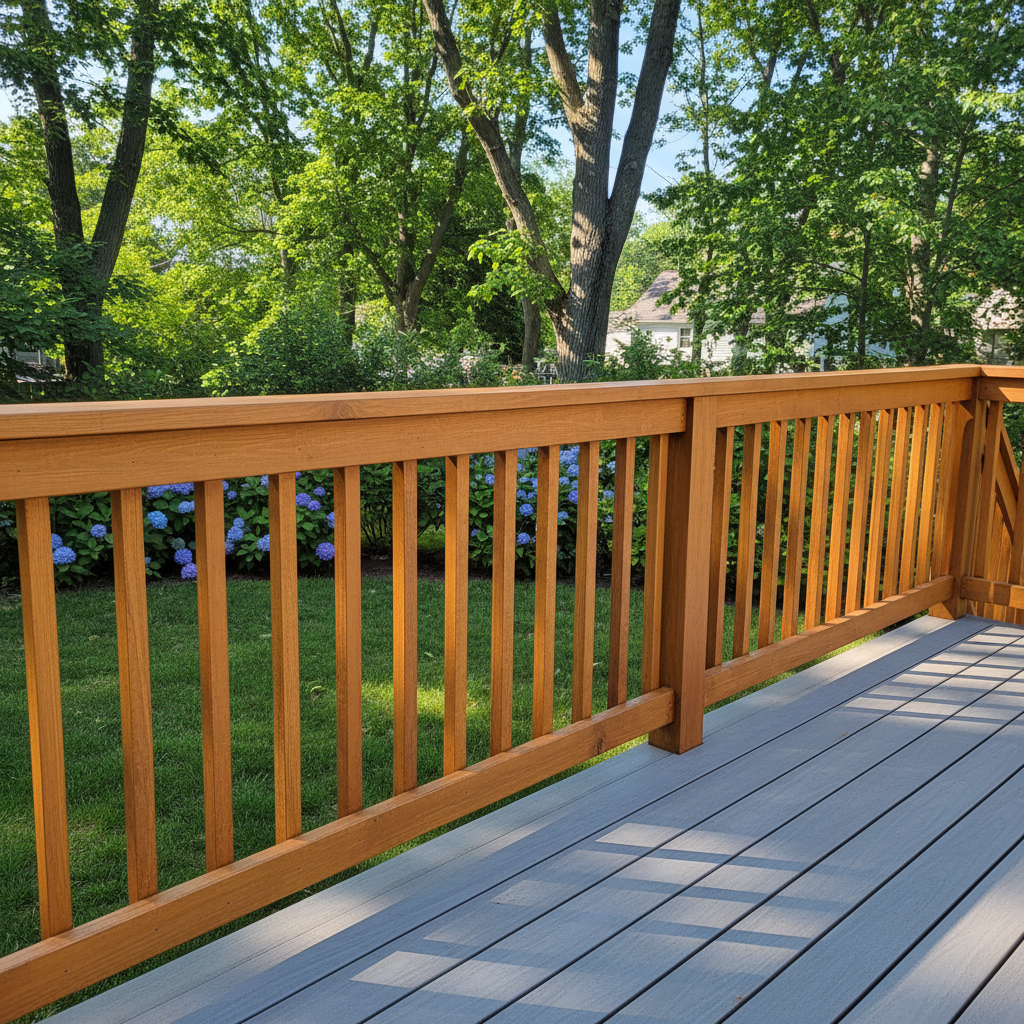
You just invested in a beautiful new deck, maybe even had Platinum Decks Medford install some sharp-looking railings. That's great! But the job isn't done just because the last screw is in. Those railings, whether they're wood, composite, or metal, need a little love to stay safe and looking good, especially with our crazy Medford weather.
Extending Your Railings' Life
Think about what your railings go through here. We get those brutal winters with snow and ice, then the humid summers, and don't forget the spring thaws and fall rains. All that expansion and contraction, plus moisture, can really take a toll. The biggest thing you can do to extend their life is proper sealing and protection.
- Wood Railings: If you've got pressure-treated wood, it still needs a good quality stain and sealant. Don't cheap out here. I'm talking about a product designed to stand up to UV rays and moisture. You'll want to reapply that every 2-3 years, sometimes more often if it's a high-traffic area or gets a lot of direct sun/rain. Sanding lightly before reapplying helps it adhere better.
- Composite Railings: These are pretty low-maintenance, which is why a lot of folks choose them. But 'low-maintenance' doesn't mean 'no maintenance.' You still need to clean them regularly to prevent mold and mildew, especially in shaded areas or where leaves pile up. A simple soap and water solution usually does the trick.
- Metal Railings (Aluminum, Steel): Aluminum is great because it doesn't rust, but the powder coating can chip or scratch. Keep an eye out for that and touch it up quickly to prevent further damage. Steel, especially if it's not galvanized or powder-coated, is prone to rust. You'll need to clean off any surface rust and repaint with a rust-inhibiting primer and paint.
Another big thing is making sure water drains away from the posts. If you've got posts sitting directly on the deck surface, make sure any trim or flashing around them isn't trapping water. That's a recipe for rot, especially on older decks in places like the South Medford triple-deckers where water can sit.
Regular Maintenance: What to Look For
This isn't rocket science, but it does require a little attention. I tell my clients to do a quick visual check at least twice a year – once in the spring after the snow melts, and again in the fall before winter sets in.
- Tightness: Grab each railing post and give it a good shake. Is it wobbly? Are the balusters loose? Loose connections are a safety hazard. Tighten screws or bolts as needed. Sometimes, you might need to replace a stripped screw with a slightly larger one or use a wood filler first.
- Cleanliness: Dirt, grime, pollen, and mildew aren't just ugly; they can hold moisture against the material and accelerate wear. A good scrub with a brush and deck cleaner (following the manufacturer's instructions) can make a huge difference. For tough spots, a pressure washer on a low setting can work, but be super careful with wood and composite – you can damage them easily.
- Damage: Look for cracks, splinters, rot, rust, or chips in the finish. Catching these early can save you a lot of headache and money down the road. Small cracks in wood can be filled; minor rust can be sanded and painted.
- Hardware: Check all the screws, bolts, and connectors. Are they corroded? Are they still doing their job? Replace anything that looks compromised.
Warning Signs You've Got a Problem
Sometimes, what starts as a small issue can turn into a big one. Here are some red flags:
- Excessive Wobble: If a railing post or a whole section of railing feels really loose, like it could give way if someone leaned on it hard, that's an immediate safety concern. Don't ignore it.
- Soft Spots or Discoloration in Wood: This is a classic sign of rot. Probe the wood with a screwdriver. If it feels spongy or crumbles, you've got rot.
- Significant Rust: If metal components are heavily rusted, especially at connection points, their structural integrity might be compromised.
- Cracked or Broken Balusters/Rails: Obviously, if something is broken, it needs to be fixed or replaced right away.
- Water Pooling: Any area where water consistently sits on or around a post or railing connection is asking for trouble.
When to Call a Professional
Look, I'm all for DIY, but there are times when you need an expert. If you see any of those major warning signs, especially excessive wobble or widespread rot, it's time to call someone like us. Don't try to jury-rig a fix for a structural issue. Your family's safety, and anyone else using your deck, depends on those railings being solid.
Also, if you're not comfortable with heights, don't have the right tools, or just don't have the time, that's okay. Sometimes a professional repair or replacement is the smartest and safest option. We've seen it all, and we can usually diagnose and fix problems efficiently, making sure your railings are up to code and safe for years to come.